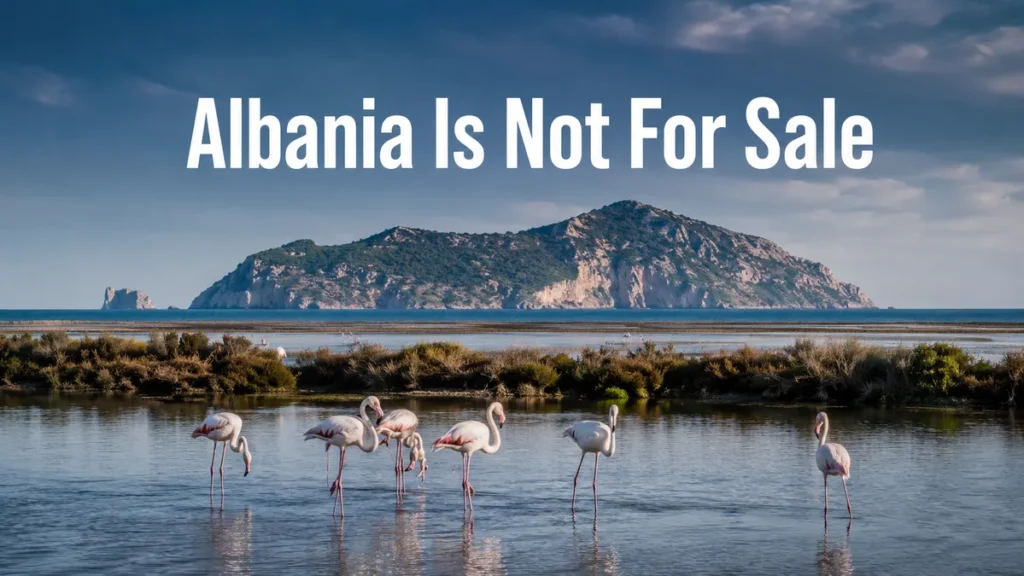
Albania Is Not For Sale
Summary
The “Albania Is Not For Sale” protests are demonstrations against luxury tourism projects planned in or near protected coastal and wetland areas in Albania, especially around Vjosa-Narta, Narta Lagoon, Zvërnec, and Sazan Island.
The protests began after citizens, environmental groups, and local residents raised concerns that protected nature and public land were being opened to private resort development linked to powerful foreign investors, including a project linked to the Trump family through Jared Kushner’s investment firm.
Protesters say Albania’s protected land, coastline, wetlands, islands, and public natural heritage should not be transferred or developed for private profit without transparency, environmental protection, and public accountability.
Their demands focus on protecting nature, keeping public land in public hands, investigating ownership disputes, ensuring transparency, and stopping development that could damage protected ecosystems.
Protected public land should not be opened to private luxury resort development.
Key Messages
The main message of the protests is:
Albania’s protected nature, public land, coastline, wetlands, and islands should not be transferred or opened to private luxury resort development without transparency, public consent, environmental protection, and respect for local communities.
The protesters are not simply opposing tourism or investment. They are opposing a model of development where protected land and public natural heritage are treated as private assets for profit.
Common slogans and messages associated with the protests include:
- Albania is not for sale
- Save Vjosa-Narta
- Hands off Vjosa-Narta
- Nature over money
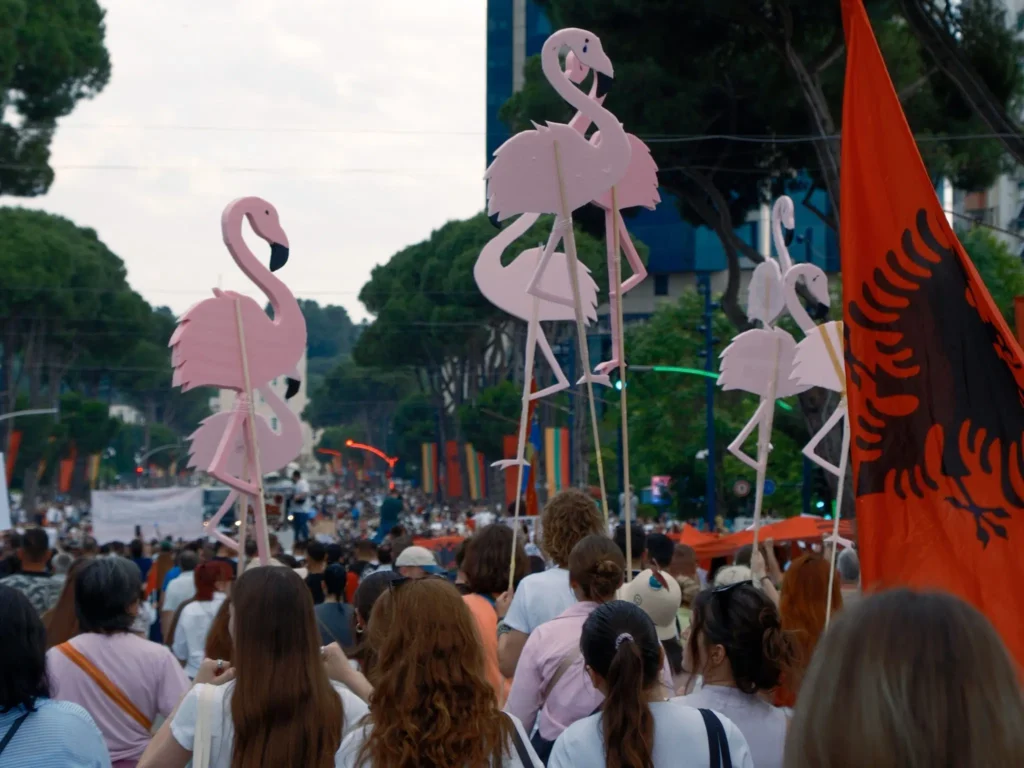
- We are the flamingos
- Sea turtles were here first
- Flamingo revolution
Why the Flamingo Became a Symbol
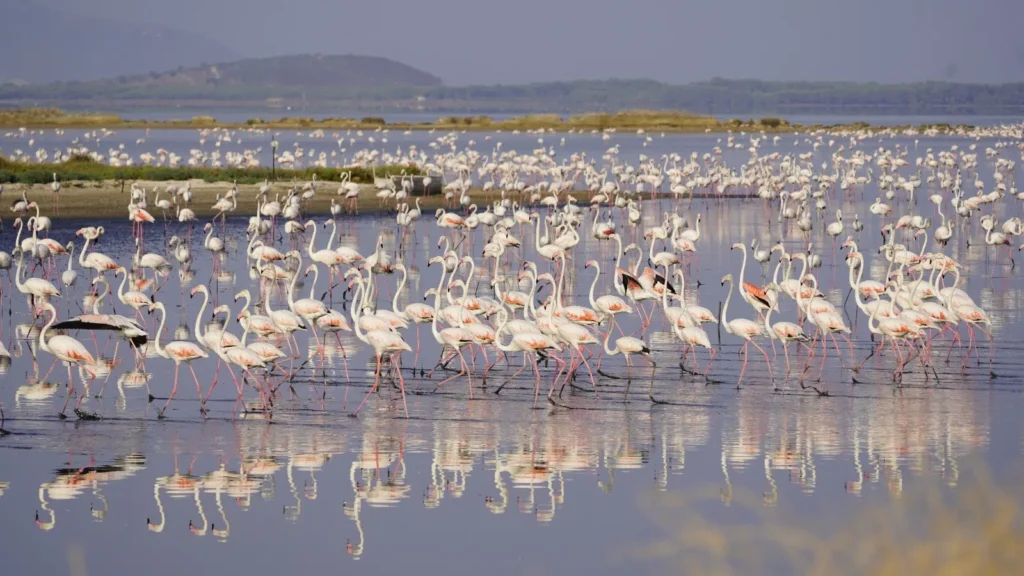
The flamingo became the symbol of the protests because Vjosa-Narta and Narta Lagoon are important habitats for flamingos and other bird species.
For protesters, the flamingo represents more than one animal. It represents Albania’s natural heritage and protected ecosystems.
Public nature should not be sacrificed for private profit.
The flamingo is also a simple and visible symbol. It helps people understand that the issue is not only about land, buildings, or tourism, but also about the future of Albania’s protected nature.
How the Protests Began
The protests grew in June 2026 after plans advanced for luxury resort developments in environmentally sensitive parts of Albania’s coast.
The most controversial areas include:
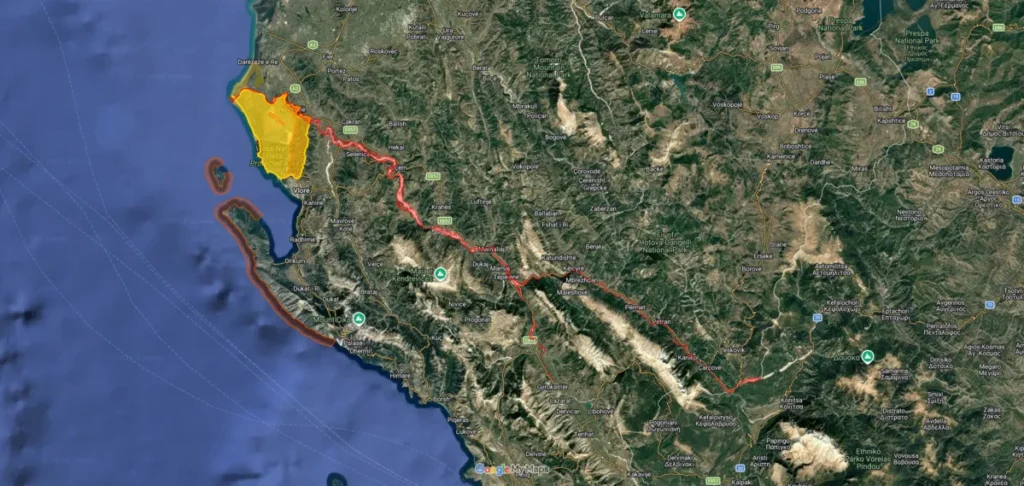
- Vjosa-Narta Protected Landscape
- Narta Lagoon
- Zvërnec
- Sazan Island
- Nearby coastal and marine protected areas
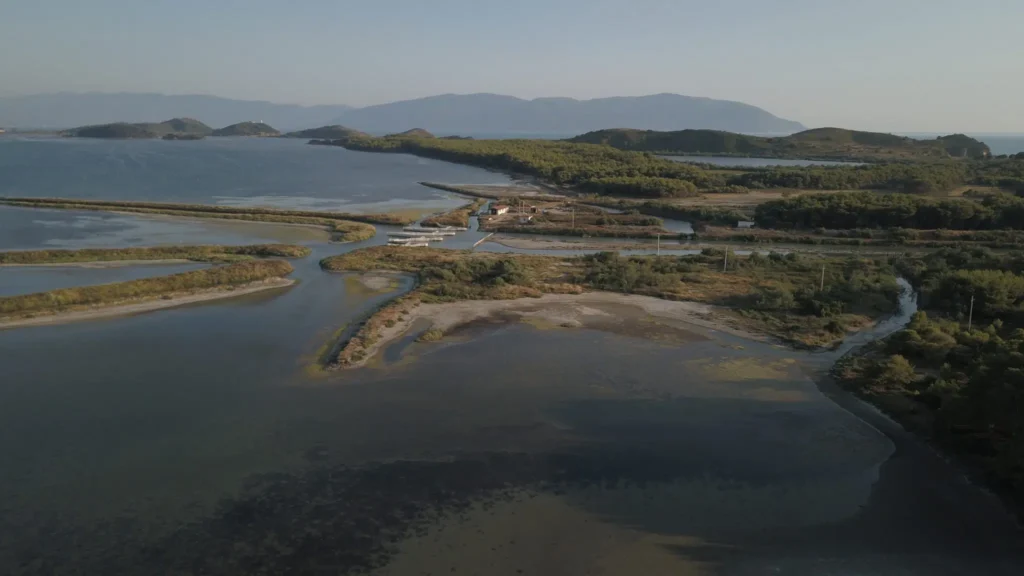
These areas include wetlands, beaches, forests, marine habitats, and wildlife zones. Environmental groups describe Vjosa-Narta as one of the most valuable coastal ecosystems in the Mediterranean.
Public anger increased after reports of construction preparation, fencing, private security, and restricted access in areas that many citizens consider public, protected, or disputed.
For many protesters, the issue became larger than one resort. It became a symbol of a wider concern: public and protected land being used for private luxury development without enough public control or transparency.
What the Protests Demand
The protesters’ demands can be summarized in a few main points.
1. Protect Vjosa-Narta and other natural areas
Protesters want the government to stop or review any project that could damage protected wetlands, lagoons, beaches, dunes, forests, marine areas, or wildlife habitats.
2. Keep public land in public hands
A central demand is that Albania’s coast, islands, wetlands, and protected landscapes should not be treated as private assets for luxury resort development.
3. Full transparency
Protesters are asking for clear public information about:
- Who owns or controls the land
- What contracts or agreements have been signed
- What land has been leased, sold, or transferred
- What public benefits have been promised
- What environmental assessments have been completed
- Whether protected status has been changed or weakened
- Whether local communities were properly consulted
4. Respect for local communities
Some local residents say land ownership is disputed and that historical property claims have not been properly resolved. Protesters say local communities should not lose access to land, coastline, or livelihoods because of private resort projects.
5. Accountability from public authorities
The movement calls for public authorities to explain how the projects were approved and whether laws on protected areas, public land, ownership, and environmental protection have been respected.
6. Repeal of Law 21/2024
Protesters and environmental groups also call for the repeal of Law 21/2024, which changed Albania’s rules on protected areas.
They say the law makes it easier for tourism and infrastructure projects to move forward inside protected natural areas. For protesters, repealing it is important to restore stronger protection for public land, wildlife habitats, wetlands, coastlines, and national parks.
Why Protesters Oppose the Projects
Protesters are not simply against tourism or investment. Their concern is with tourism development that uses protected or public land without strong environmental safeguards, transparency, and public consent.
The main concerns are that resort construction could:
- Disturb wildlife
- Damage protected habitats
- Reduce public access to the coastline
- Change the character of protected landscapes
- Create long-term environmental damage
- Set a precedent for more private development in protected areas
Protected Nature Is the Main Concern
The Vjosa-Narta and Narta Lagoon area is an important habitat for many species, including:
- Flamingos
- Migratory birds
- Dalmatian pelicans
- Mediterranean monk seals
- Loggerhead sea turtles
The area also includes wetlands, dunes, beaches, forests, and marine habitats.
Environmental groups have warned that large-scale resort development could damage one of Albania’s most important natural areas.
Public Land and Ownership Disputes
A major part of the controversy is the status of the land.
Some areas involved in the projects are public, protected, formerly military, coastal, or environmentally sensitive. In other areas, local residents have raised ownership disputes.
Some villagers have claimed that land connected to the development was wrongly transferred or sold despite unresolved historical property claims. These disputes are especially sensitive because Albania has long-standing land ownership problems linked to the communist period and post-communist privatization.
The public concern is simple:
Land that belongs to the public, local communities, or protected nature should not be quietly converted into private resort property.
Protesters say that before any major resort project moves forward, the state must clearly prove that the land process is legal, transparent, and fair.
Transparency and Corruption Concerns
The protests also reflect wider concerns about corruption, political influence, and lack of transparency in major development projects.
Protesters and critics have raised questions about:
- Whether the public has seen the full contracts
- Whether environmental laws are being followed
- Whether protected status has been changed to allow development
- Whether public land has been transferred fairly
- Whether local communities were properly consulted
- Whether powerful investors receive special treatment
- Whether Albania’s public interest is being protected
The Albanian government has defended the projects as a way to attract investment, create jobs, and develop tourism.
However, protesters say economic development should not come at the cost of protected nature, public land, local rights, and democratic accountability.
Sources
- Reuters: “Albania is not for sale”, protesters say over Kushner-linked luxury resort near a protected wetland
- Reuters: Albanians protest over Kushner-linked luxury resort on pristine coastline
- Reuters: Kushner project being developed on disputed land, Albanian villagers say
- BirdLife International: Albania’s flamingo protests: When a government sells off a wetland, it’s selling off democracy too
- Financial Times: Tens of thousands of Albanians join “Flamingo Revolution” protest
- The Guardian: People in Albania: share your thoughts on the recent “not for sale” protests
- Deutsche Welle: Kushner-backed Albania resort sparks protests, EU concerns
- CAN Europe: We stand with the people of Albania and the Vjosa-Narta wetland
- PPNEA: SAVE VJOSA-NARTA